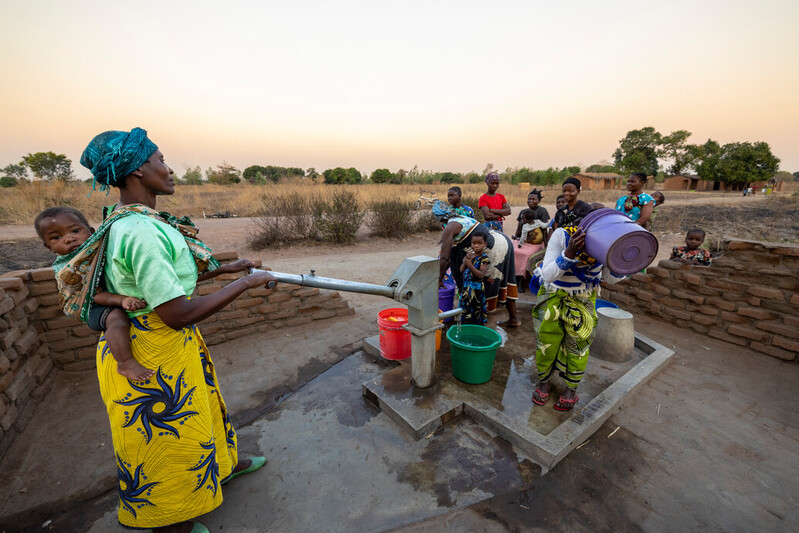
Water and Disease Prevention

Clean water, sanitation and hygiene are the bedrock of good health. Amref works to increase access to clean, safe water, helping to prevent and control disease and to allow people to thrive 

A stronger Africa starts with clean water.

Clean water is a fundamental human right and the foundation of good health.  

Access to safe water and adequate sanitation facilities affects everything from infant survival rates to food security and nutrition; from education to economic progress. 

Despite gains made over the last decade or so, a quarter of the world’s population – some 2.1 billion people – still lacks access to safely managed drinking water. The WHO estimates that improving access to water, sanitation, and hygiene (WASH) could prevent at least 1.4 million deaths every year. 

Amref Health Africa provides communities across the continent with sustainable access to clean water as well as sanitation and hygiene infrastructure, preventing deadly diseases and enabling people to thrive. 
Our impact

In 2025, with your support, Amref Health Africa: 

0 K

Enabled people to access sanitation facilities

0

Provided girls with information, safe spaces, and support related to periods

The Challenge: Unequal access

Despite significant progress on some fronts, sub-Saharan Africa is the only part of the world where the number of people without access to clean drinking water is growing. 

779 million people across the continent lack access to basic water services, and 1 in 3 people experience water scarcity, meaning that demand far outstrips supply. 

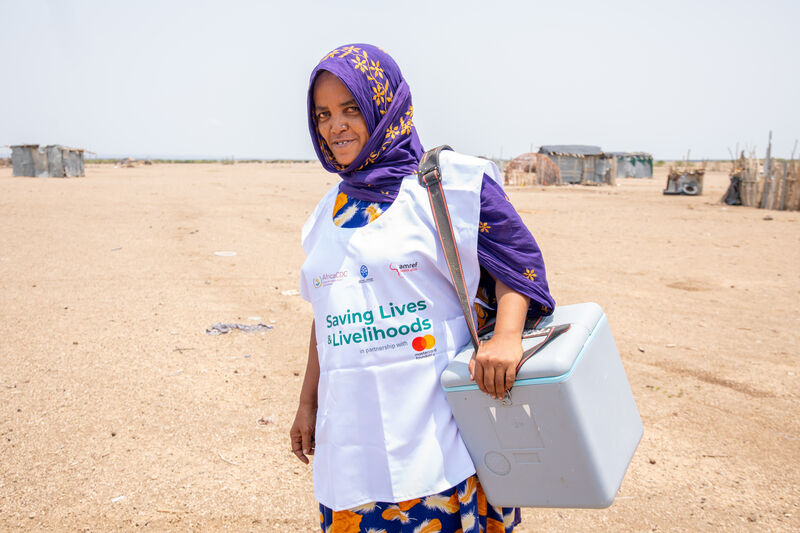
Zeybo Mohammed, a Health Extension Worker, heading to a community vaccination activity holding a vaccination box for vaccines, in Semera, Afar Region in Ethiopia. © Amref Health Africa / Kennedy Musokya

Our Solution: Infrastructure and information

In partnership with communities, Amref Health Africa: 

  • Designs and builds climate-resistant water sources close to where people live, work, and learn. 
  • Trains community members to monitor and maintain this infrastructure, ensuring a sense of ownership that is key to its sustainability. 
  • Supports the creation of community savings groups to invest in the upkeep of the sources. 


The Challenge: Gender inequity

As with many issues that are caused by – and contribute to – inequality, it is women and girls who are most affected when water is scarce.  

In 53 countries where data exists, women and girls spend 250 million hours per day on water collection: over three times more than men and boys. Walking to fetch water is not just time-consuming: there is ample evidence to demonstrate that these journeys expose women and girls to sexual and gender-based violence. 

This inequity makes itself felt early, when girls begin their periods. When schools do not offer secure toilets and a place to change and wash, girls often stay home, which affects their education – and their confidence. 

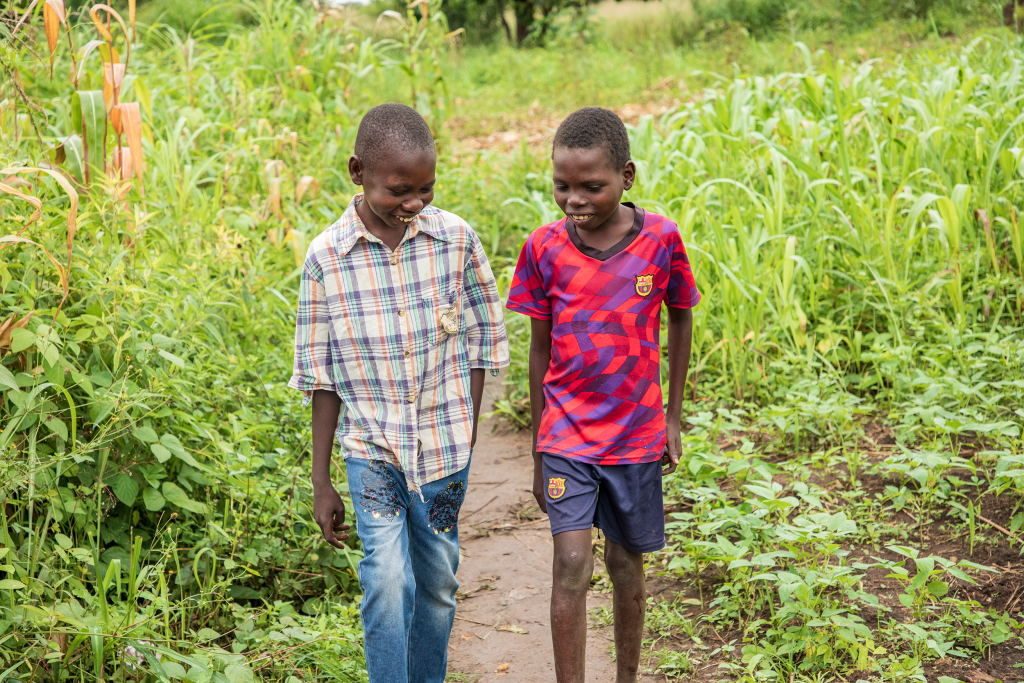
William and Samson, best friends with Nodding Syndrome, walking through their home in South Sudan © Amref Health Africa / Kennedy Musyoka
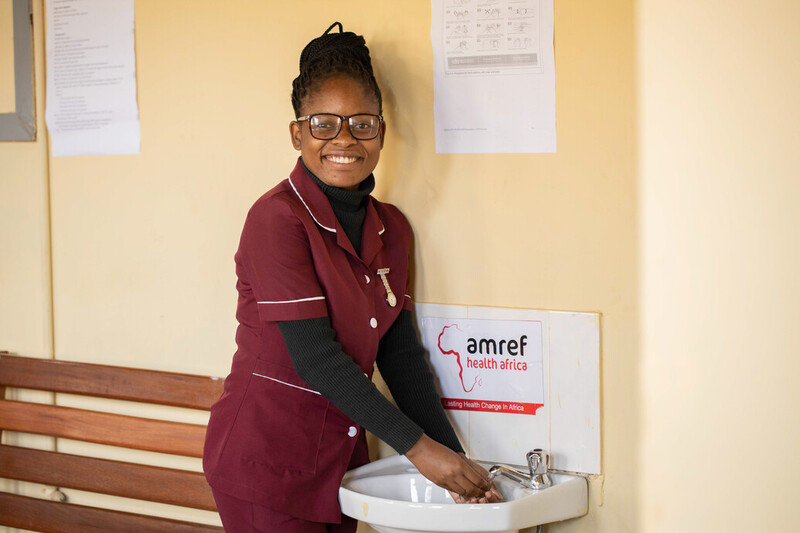
A nurse at Phalombe Health Centre, Malawi, washes her hands. © Amref Health Africa / Amaru Photography

Our Solution: Lightening the load

Amref Health Africa: 

  • Brings water closer to where women live, saving them time – time that can be put towards other activities, including leisure – and keeping them safe. 
  • Works with schools to install water points, handwashing facilities, and toilets with lockable doors, bins, and a place for girls to wash and change during their periods. This, in turn, improves school attendance and helps build girls’ confidence. 
  • Supports school health clubs where boys and girls learn about their bodies and their rights – and where they learn to advocate for their own needs as well as each other’s. 
  • Integrates gender into each of its WASH programmes and supports policy-makers to do the same. 

“Before Amref brought us clean water, the source was too far. Now, if I go to fetch water, it takes less than twenty minutes, about ten. When I return, I cook on time, greet the children after school, wash clothes promptly, and I feel free [...] I feel that life has entered my soul.”

The Challenge: Climate change

The climate crisis is intensifying water scarcity across Africa. Already, two thirds of its land mass are categorised as arid or semi-arid.  

Extreme weather events like floods and droughts are damaging sanitation infrastructure and contaminating water supplies. Reliance on contaminated sources leads to high rates of water-borne diseases including diarrhoea, cholera, and typhoid; and floods leave stagnant water, providing breeding grounds for mosquitoes and aiding the spread of vector-borne diseases such as malaria and dengue. 

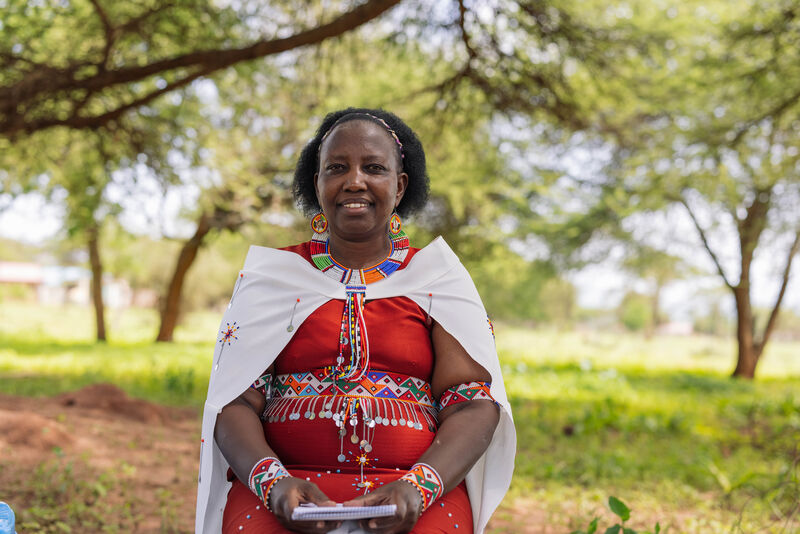
A portrait of Memusi Lente, secretary of the committee organising the Alternative Rights of Passage (ARP) in Kajiado © Amref Health Africa / Sarah Waiswa
Community water pump in Malawi. © Amref Health Africa / Amaru Photography

Our Solution: Building resilience through local knowledge

In response to the threat posed by the climate crisis, Amref Health Africa: 

  • Weaves resilience to the climate crisis into every project and every piece of WASH infrastructure we build. 
  • Draws on indigenous knowledge to ensure changes are picked up early and mitigation measures put in place. 
  • Works through Community Health Workers to raise awareness of water-borne diseases and encourage the protective measures that are key to preventing epidemics. 
  • Is a trusted partner for governments across the continent: when there is an outbreak of a water-related or infectious disease, Amref is among the first organisations called upon to be part of the task force that develops and guides the implementation of the national response. 

The Challenge: The spread of preventable infections

Worldwide, an estimated 9.5 million lives are lost annually to infections acquired in healthcare facilities with inadequate water, hygiene and sanitation facilities. Of these deaths, 64% are among women and children.  

Effective infection prevention and control, aided by good hygiene, can prevent up to 70% of healthcare-associated infections. 

Our Solution: Equipping health facilities, holistically

Amref Health Africa connects health facilities with clean running water and install handwashing facilities, toilets, and waste management infrastructure. Having ready access to clean water means women can give birth safely and with dignity – and helps ensure babies get the best possible start in life. It means staff can wash their hands and their instruments and safely dispose of waste, reducing the spread of life-threatening infections. 

“Before the coming of water, we had many problems [...] When a woman came and delivered and there was a need for her to wash her things, to take a bath – you know, everything was dirty. She had just delivered, so she could not move that distance to fetch water. She stayed here dirty. Helpless. That was very bad. “The coming of water has helped a lot [...] it has helped to break the spreading of infections like cholera and waterborne diseases. “We cannot talk about infection prevention without talking about water.”

According to the African Union, every $1 (USD) invested in water and sanitation generates at least $7 in benefits across health, education, food security, and environmental protection. 

Donate today to give more people access to life-saving clean water